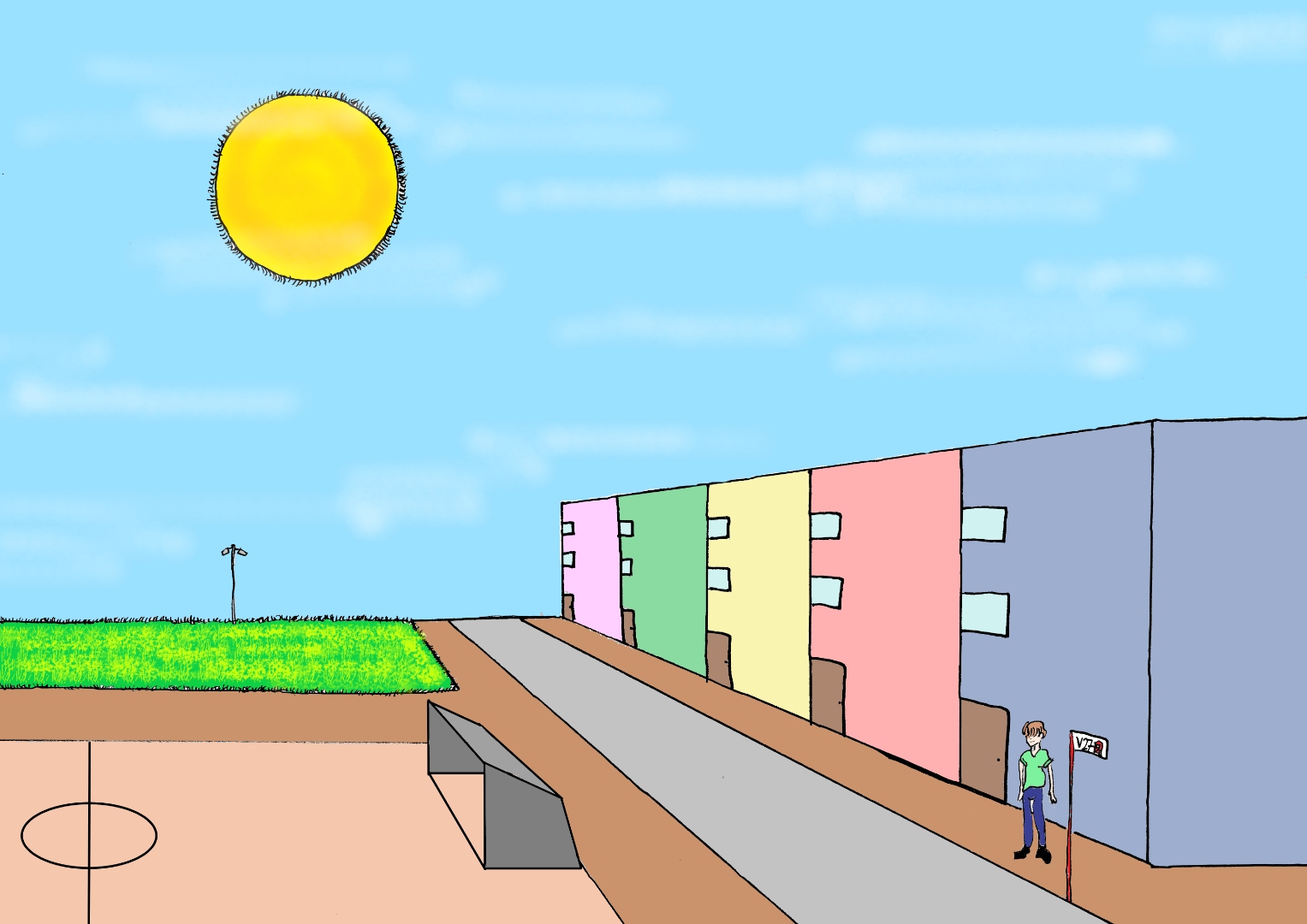
Diego, 16, has just finished high school and is heading into a technological bachillerato. He lives in a large city, shares a home with his parents, siblings who are also students. He is curious about technology, drawn to engineering, and more optimistic about AI than most of the participants in this series.
Growing Up With a Roomba and Ambitions
Technology is present but not dominant in Diego’s home. There is no Siri or Alexa, but the family uses a Roomba constantly — “it works pretty well, the only thing is that sometimes it gets stuck and beeps.” He rates his knowledge of AI at 6 out of 10 and thinks about it in practical terms: “a program that some electronic devices have, which helps them learn and apply what they’ve learned to different situations.” He first encountered the robot Sophia in a video and found it both impressive and slightly unsettling: “it scared me a little because the AI is as if it could become a person.” He references WALL·E as a positive cultural image of robots. His overall view is positive — “robots and AI have more positive things than negative” — though he insists on moving carefully.
A Safer, More Equal City
Safety in public space is Diego’s most urgent concern about the present, and his clearest demand for 2050. He lives in a neighborhood where street robbery is common, parks feel threatening at night, and the city he describes is dirty despite frequent cleaning trucks passing through. His 2050 is not defined by technological spectacle but by livable conditions extended equally to everyone: equal housing, nature in cities, football pitches, parks with cameras, and a large-scale Roomba equivalent for the streets. In his ideal society, income differences would not determine quality of life — “even if you are very rich, everyone has the same opportunities and equal conditions.”
Ideal Robot / Device — Safety at Night
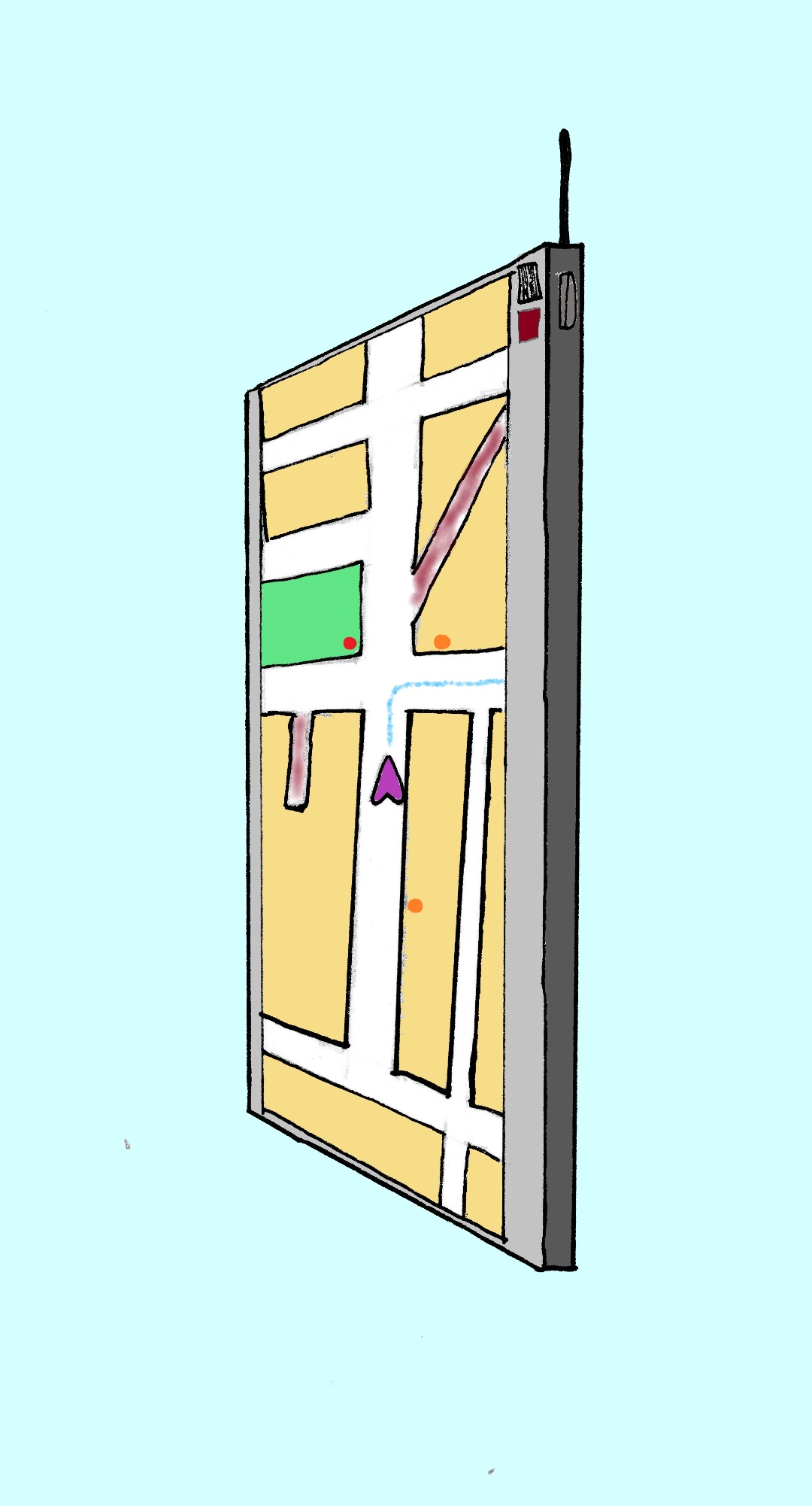
The device Diego designed solves the problem he lives with: navigating the city safely after dark. It is a small gadget — smaller than a phone, fits in a pocket — that uses satellite data to plot the safest route home in real time. Red dots mark groups of people gathered in parks. Red alleys flag sparsely populated, potentially dangerous routes. Orange dots show open restaurants. “If you are a night worker it would be handy,” he says. The device charges at home with a destination menu. It is non-humanoid, task-specific, and designed around a real daily need. He prefers non-organic machine forms — humanoid robots cause “rejection,” and animal forms, while acceptable, are less efficient than a purpose-built design.
AI in Schools, Hospitals, and Public Life
Diego is more open to AI in institutional settings than most of his peers in this series. He thinks an AI judge could be “more impartial than a person” and that AI in politics could analyze past mistakes and help avoid repeating them. He supports AI in hospitals (surgical robots can be more precise, though diagnosis still needs experienced human judgment), in schools (he likes the idea of a robot-teacher pairing, each doing what the other can’t), and in hiring (objective, free of personal stigma). He opposes AI in customer service (“when you ask for customer service you like to talk to a person”) and is deeply uncomfortable with military applications and border management — “it is already difficult enough for people who try to immigrate as on top of that encountering a robot.”
Work Means the Future — and Cooking Is Non-Negotiable
Diego sees work as his future in a direct, unsentimental way: “if I don’t have a job I can’t live.” His aspiration is aeronautical or civil engineering, or possibly architecture — fields where he thinks robots can assist with calculations but not replace the human designer. He would happily delegate sweeping, mopping, and hanging laundry to a robot, but not cooking: “it’s satisfying to cook something and eat it.” He believes AI and robots will eventually be widely accepted, that maintenance and engineering jobs around robotics will grow, and that the right goal is not faster production but more time with family. “Robots should be used not so much to make production more efficient but more to help people be happier.”