Xiaoyu is a 14-year-old girl about to enter her third year of junior high school. She boards at her school during the week, returning home only on weekends — which means her time with smartphones, smart speakers, and anything digital is heavily governed by both school rules and her mother’s firm hand on screen time. Yet despite that limited exposure, she has vivid opinions about where AI and robots belong in her life, and where they absolutely do not.
Growing Up Between School and Home
Boarding school shapes Xiaoyu’s daily rhythm in ways that most of her urban peers do not experience. The weekday world is textbooks and dormitories; weekends bring home, but also a backlog of homework that leaves little room for leisure. Her main encounters with AI are incidental — a smartphone for scanning questions, a voice assistant for playing music or setting a timer, and a Xiao Ai smart speaker at home that she sometimes uses for games when she is especially bored. “AI can enrich my life, so to speak,” she says, though the qualifier matters. The enrichment is real but modest, slotted into the margins of a schedule dominated by academic pressure.
Imagining 2050: Freedom from Chores, Not from Friends
When asked about 2050, Xiaoyu’s most immediate wish is domestic: she wants to come home and find the cooking done, the laundry finished, the housework complete, so that she can simply rest. Robots handling household chores strikes her as an obvious and welcome application. For her own career, she hopes to become a doctor — and she believes medicine will be longer, more precise, and more professional by then, with AI helping doctors rather than replacing them. She also imagines faster transportation and more versatile clothing fabrics, even the possibility of portable houses. But for entertainment, her picture of 2050 looks a lot like today: going out with friends, traveling, listening to music, dancing. “I don’t think robots are as good as real people around you,” she says. “I still want to do these things with my friends.”
Where AI Belongs — and Where It Doesn’t
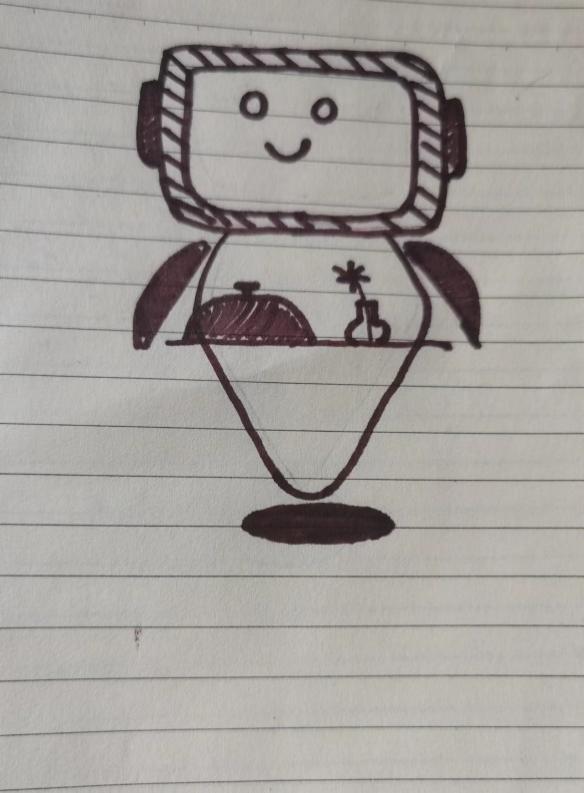
Xiaoyu draws firm lines. She trusts AI to handle housework with better precision than any human; she is comfortable with robots assisting elderly care in nursing homes, where she thinks they could be more conscientious than hired caregivers. For health management — reminders to take medicine, basic temperature checks — she sees clear value. But when it comes to surgery or serious medical treatment, she is unequivocal: a real doctor must be in charge. The same logic extends to education. She firmly opposes AI grading open-ended answers in exams, particularly in subjects like Chinese composition or geography, where a rigid program cannot weigh the many possible correct interpretations a human marker would consider. “If it makes a mistake for you, aren’t you the one who loses in the end?” she says. And she is equally opposed to AI invigilators — a student scratching their head during an exam could easily be misread as suspicious behaviour.
Half-Trust, Half-Fear
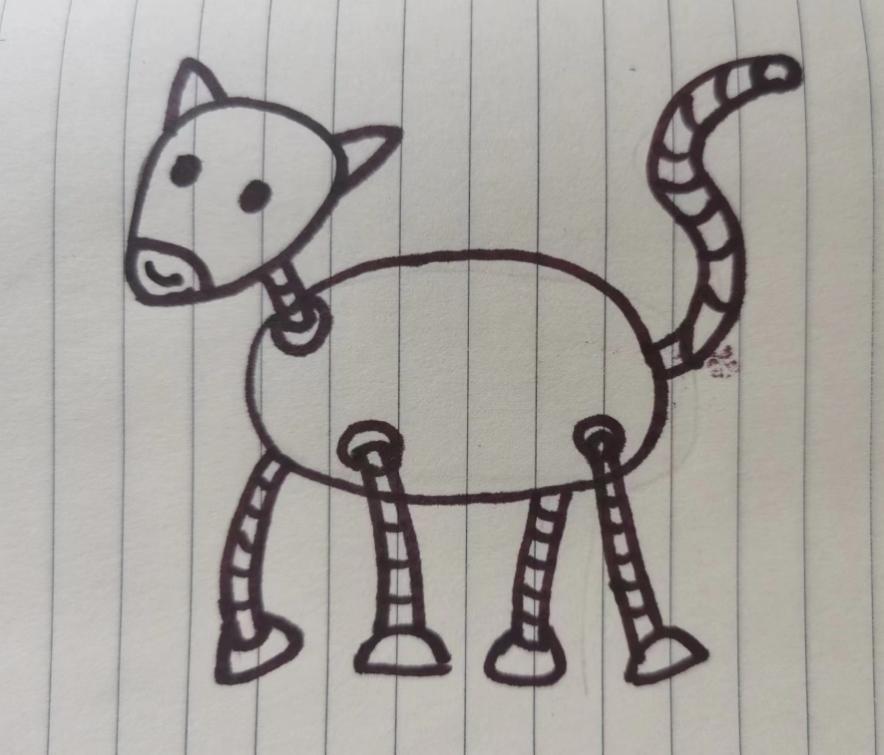
Xiaoyu gives AI exactly fifty percent of her trust. The trusted half covers the things machines genuinely do better: precision, consistency, tireless service. The distrusted half is the speculative future, where a sufficiently advanced AI might develop self-consciousness and slip beyond human control. She is not especially alarmed by this prospect in practical terms — “as long as it is under the control of human beings, there will not be too many problems” — but she keeps the fear alive as a reminder that monitoring matters. She is also wary of humanoid robots in a more visceral way. She much prefers animal-like robots, which she finds warm and approachable, while humanoid ones strike her as genuinely unsettling: the more realistic they are, the harder they are to distinguish from a person, and that realisation, when it comes, only deepens the unease. Chatbots, similarly, are a firm no — no machine can replicate the accumulated knowledge of a friendship.
A Future She Wants to Control
Pressed on intelligence augmentation, Xiaoyu describes one fantasy with complete sincerity: a chip that downloads all knowledge directly into the brain, so she would never have to study. She laughs at it, but also means it. Beyond that one wish, though, she wants no algorithmic involvement in her choices. Career planning, she insists, must stay entirely her own: “This is my own life plan, my own dreams. I think it is enough to think about it myself.” Robots replacing couriers and delivery workers does not trouble her — she sees it as a push that would force people to develop more skilled work. What matters to Xiaoyu is that the big decisions, the ones that define a life, remain in human hands.