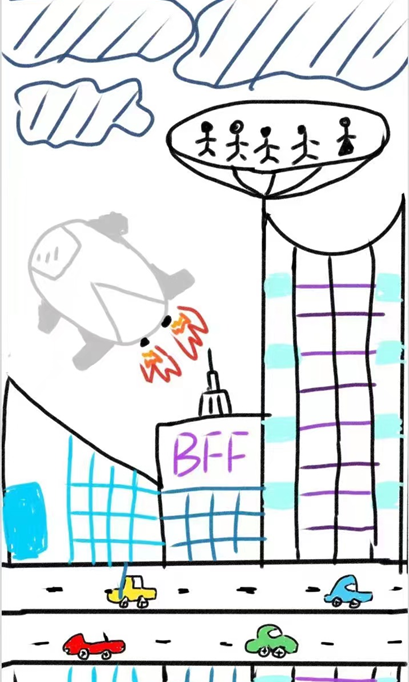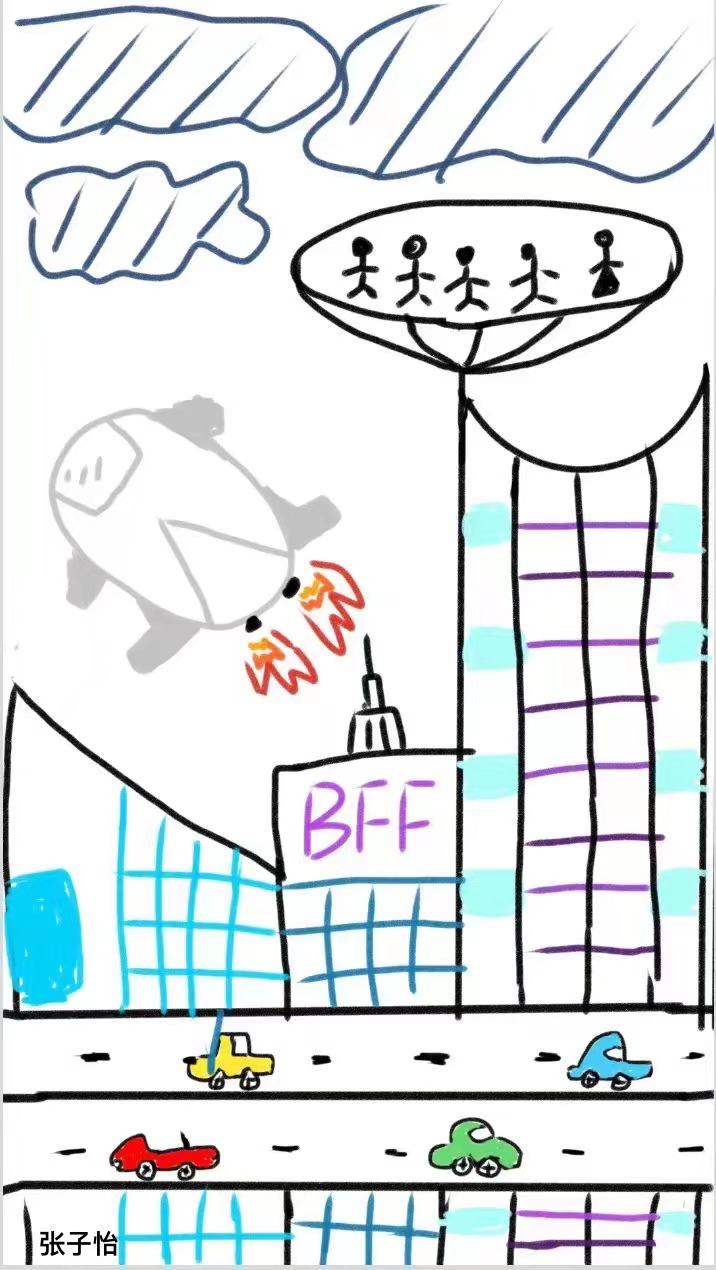
Jingyi is a 20-year-old second-year university student majoring in international finance at a college in southern China. She lives at home with her mother and sister; her father works away. Her day-to-day encounters with AI are modest but concrete: guide robots in the school library that can point students to books and floors, and a small smart speaker at home. She approaches AI with a measured optimism — positive about its potential, attentive to its limits, and curious about whether machines will ever feel genuinely human.
Growing Up Between Screens and Classrooms
For Jingyi, AI has always been something adjacent to ordinary life rather than central to it. The guide robot in the library is convenient, practical, and barely remarkable. The speaker at home fills a similar role: useful for routine tasks, easy to ignore otherwise. She draws an intuitive distinction between AI as a broader category of software and intelligence, and robots as the physical things you encounter in public spaces — and she includes the one inside the other. “Robots may be one area of artificial intelligence,” she says. “Artificial intelligence will include more.” That framework shapes her thinking throughout: she tends to evaluate specific applications on their own terms rather than treating AI as a monolithic thing to accept or refuse.
A Future of Stability — With Technology Woven Through It
By 2050, Jingyi expects to be in her forties, with a stable job, a happy family, and children who are “obedient and filial.” She does not describe a dramatically transformed life — more an amplified version of a good life that already feels reachable. Technology, in her picture, will simply be more present: AI integrated into daily routines so thoroughly that people no longer notice it. For her own purposes, she values AI tools that help her learn — searching for information, accessing reliable sources, covering broader ground than any textbook allows. She mentions intelligent learning devices and reading pens as already useful precursors to what she hopes for.
At Home, in School, and in the Hospital
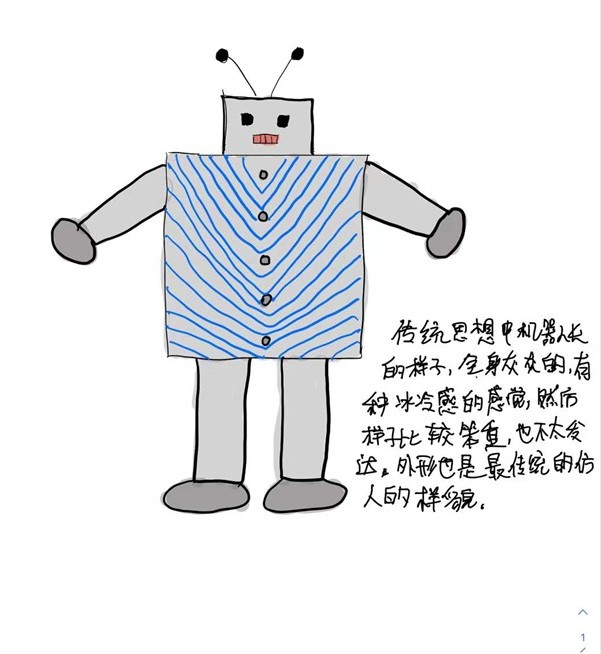
In the domestic sphere, Jingyi sees practical advantages for nearly every application. Robots handling housework, walking pets, supporting childcare — she is broadly comfortable with these. Her caveats are consistent: robots cannot respond to emergencies as a person would, and they cannot provide the emotional texture of human care. She sees elderly care as a particularly good fit — better, she suggests, than childcare, because older people are more self-sufficient and the basic needs are more procedural. Teaching is another area where she is open, if cautious: AI can deliver broader information, bring novelty into the classroom, and make students more engaged. But for subjective exam marking, she is firm — a robot is “too objective and too rigid,” incapable of weighing the variety of valid perspectives a student might express in an open-ended answer. For medical care, basic examinations and routine post-operative support are acceptable; major surgery, where emergencies require human judgment, is not.
Where AI Belongs — and Where It Doesn’t
In the workplace, Jingyi tends to side with human judgment. AI-driven hiring screens only for surface data — qualifications, keywords — and misses the character and inner thinking that a face-to-face conversation surfaces. AI colleagues feel slightly unsettling; AI clients are workable but “rigid.” She is more willing to accept AI in spaces where interpersonal friction is actually a problem: guide robots in shopping centres, for example, make perfect sense because customers often feel uncomfortable asking human staff for directions. In public infrastructure — water, power, transport — she is generally positive, noting that automation saves urban resources and improves reliability. For crime prediction, she is sceptical: data can flag behavioural patterns, but it cannot read the psychological conditions — pressure, anger, a bad moment — that actually produce a crime.
Work, Education, and What Comes Next
On the future of work, Jingyi accepts that AI will take more jobs than it creates, and that the displacement will be real. Her response is pragmatic: people will shift toward high-technology industries and fields where human judgment still matters. She is interested in work that uses AI as support rather than replacement — letting machines handle the procedural so that people can focus on what requires genuine thinking. Her deepest curiosity about AI is not technical: she wants to know whether machines will ever develop something like human emotion. She does not think current technology is anywhere close, but the question genuinely fascinates her — and it reflects a belief that the real boundary between human and machine is not intelligence but feeling.