Yanran is a 21-year-old third-year student studying at a university in a major Chinese city. Born in a smaller town, she spent her teenage years moving between cities as her family relocated, giving her a layered sense of what “city life” actually means across different tiers. She engages with AI more directly than most — using voice assistants, smart speakers, cloud-based image processing tools, and AI-generated data graphics in her coursework and internships. She is also, critically, convinced that current AI is still “weak AI,” not the real thing, and she is watching carefully for what comes next.
Growing Up Between Cities and Disciplines
The mobility of Yanran’s upbringing gave her an observational edge. She does not take any single city’s experience as representative; she has seen how technology penetrates differently across social contexts. At university, she studies how AI is reshaping communication — her research interests overlap with her teachers’ fields, which means AI is not just a topic of casual opinion but something she genuinely reads about. Her internship experience introduced her to automated data news platforms that generate AI-driven charts, and she encountered a translation robot in a museum that switched languages automatically depending on who was speaking. These concrete encounters inform an analysis that is sharper and more nuanced than her years might suggest.
A Future Lighter, More Connected — and More Human
In 2050, Yanran expects everyday life to be easier and more efficient, with robots handling domestic chores for anyone who wants that help, and working hours shortened by automation. For entertainment, she is firm: books, films, coffee — these will remain unchanged, because entertainment is “the last place that belongs to us.” She is open to playing with a robot in some capacity (she describes a Boston Dynamics-type mechanical companion) but she insists that is a change of form, not of substance — the human need for leisure and creative play is non-negotiable. Her career dream is architecture, not her current major, and she imagines designing buildings that are not “cookie-cutter.” On media, she expects VR and holographic projection to replace today’s two-dimensional social platforms, creating entirely new kinds of interaction.
At Home, in School, and in the Hospital
At home, Yanran accepts most AI applications readily — childcare support, pet feeding, elder care, household management. Her consistent qualifier is the one that matters most to her: family feeling cannot be replicated. No degree of intelligent learning will allow a robot to substitute for human affection. In education, she draws a hard line against AI in any examination: evaluating a student “by bots and AI is a very narrow concept,” she says, and she finds it fundamentally incompatible with the multi-dimensional thinking a person brings to assessment. She is more positive about AI as a teaching aid — helping current teachers reach students more effectively. For medical care, she believes AI and robots will be genuinely useful as assistants to doctors, and she expects the arrival of strong AI to change that relationship significantly. But right now, she does not believe robots can replace physicians — they cannot understand a patient’s emotions.
Where AI Belongs — and Where It Doesn’t
Privacy and surveillance are where Yanran gets most direct. She is opposed to AI monitoring: it damages personal privacy, and if robots develop rights and obligations comparable to humans, then surveillance by a robot is a violation of human rights just as surveillance by a person would be. Credit scoring by AI has the same problem as AI-in-exams — it reduces a complex human being to simple algebra. On political decision-making, she is clear: AI and robots have no life experience, and even with self-learning capability they lack the broad understanding of human society that politics requires. Translation is the exception — she points to neural network translation and museum-deployed translation robots as genuinely impressive tools — but even there, a common saying translated literally by a machine will “have the donkey’s head and not the horse’s mouth.”
Work, Education, and What Comes Next
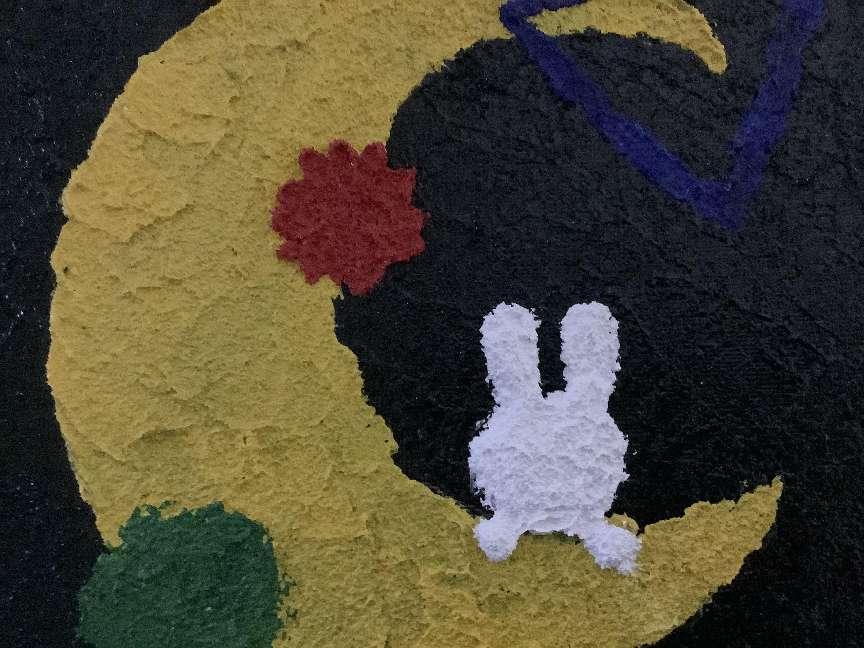
Yanran expects fewer jobs in the future, not more, as robots replace simple labour. What she finds genuinely interesting is the question of which jobs robots cannot replace — teachers and doctors, she thinks, remain irreplaceable. She wants to be an architect, and she is confident that non-formulaic, creative design lies outside what machines can do well. Her vision for the human-robot relationship in 2050 is friendship: robots as companions, not subordinates or overlords. She wants them to provide not only practical help but “emotional value.” Her ideal image is a white rabbit robot sitting on the moon, visible through VR on Mid-Autumn Festival evening — technology making something lovely feel real. It is a small, specific dream, and that is exactly the point: Yanran wants AI to serve the human imagination, not replace it.