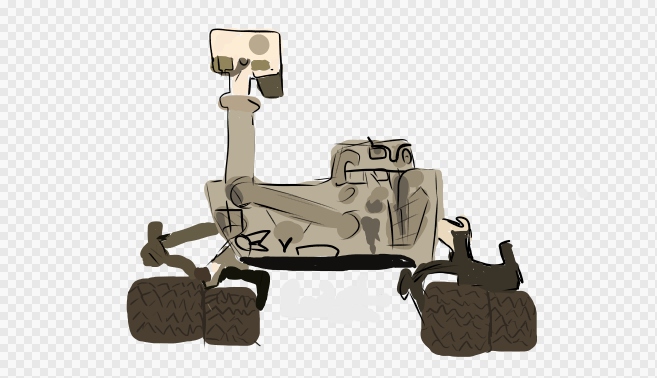
Aisha is 12 years old and a sixth-grader at a public middle school in a city in California. She was born in another country and lives with her parents, an older brother, and a younger sister. Her father works in healthcare. She uses Cortana and Siri occasionally — mostly for homework help or fun, like asking Siri to sing. Her thinking about AI is deeply shaped by her home life, particularly her wish to use technology to help her family.
AI Through the Lens of Her Family
Aisha’s most personal connection to AI is through a family member who needs extra support. When asked what technologies she’d want in 2050, she goes straight to assistive devices: “Maybe they can make a robot with a speaker that helps blind people — tells them what’s in front of them, if there’s a car nearby when they’re trying to cross the road. Something small they could hold, like a stick that blind people use.” She adds that she would want to learn about AI mainly because it could help at home when the rest of the family is away: “The robot could be the eyes of a blind person and help with chores around the house.”
Future Plans, Cautious Trust
Aisha wants to be a pediatrician. She still lives with a lot of choices ahead, she says, and knows she’ll likely remain close to her mother in 2050. Her trust in AI is measured: “Technology doesn’t always work — there’s always power outages and that kind of stuff, so maybe there’s always going to be a small chance of risk. I would trust robots, but I would still be very careful and cautious.” She is broadly positive about AI’s potential, since robots “are programmed to help us,” and she cannot think of a reason anyone would program them to cause harm.
Where Robots Would Help — and Where They Shouldn’t
Aisha sees clear roles for robots in places that are too dangerous or difficult for humans: under the ocean, in outer space, and in dangerous situations on the street. “It would be safer for police if they had robots around — they risk their life every day, and if a robot went there and someone tried to stab them, I don’t think the robot would get injured.” She endorses robot surgery — “they could be really still, the hands wouldn’t be shaking” — and robot waiters (“there would definitely be fewer food mix-ups, and I don’t think robots can fall”). For translation, she is enthusiastic: “If someone goes to Paris for a business trip and doesn’t understand French, they could bring the robot.”
Hard Lines: Care, Judgment, and Politics
Her firmest boundaries are around caregiving and decision-making. Childcare is a no: “It could malfunction any moment, and a lot of parents parent differently — the robots will probably all be the same.” For teaching, she is similarly cautious: “Sometimes when I ask Siri a question, she doesn’t understand. Maybe as an assistant teacher who can help find supplies and watch kids if the teacher needs to step out.” Political decisions she reserves clearly for humans: “The robot can’t really make choices that are best for society, but it might know what’s best for it — not always.”
A Space Robot and a Tidy Bedroom
The robot Aisha drew is for outer space research — a rover with cameras on its head, wheels, and machinery that astronauts could control remotely to explore the moon. On a more personal note, when asked what tasks she would delegate to AI, she is immediate: “Definitely making my bed, because I’m always super tired in the morning and when I forget my mom gets mad at me. And cleaning my room.”