
Interview Series: Gen Z Meets AI #19
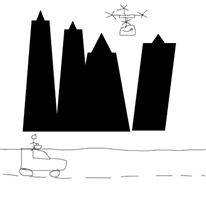
Background as a University Student Majoring in Game Development
Trevor is a 20-year-old student, about to begin his second year of university in game development, where his studies are based in computer science and are soon to incorporate aspects of AI as well. He is from London, with his mother working as a training team member at a bank, and his father being a business analyst, whose endeavours in game sales is what introduced him to his interest in video games. In his daily life, he avoids using technology such as speaking to devices, as he prefers to type, but does use a lot of AIs within the games he plays, often in the form of enemies. He also enjoys researching AI in his own time, due to the large role it plays in tech companies and video games, and bonds with his father by watching the informative show “BBC Click,” which discusses different technologies.
Aspiring to Be a Top Game Developer
Within his personal life, Trevor would like the typical future of having a partner and children. His dream career is to be a top game developer, which would most likely consist of working in a foreign country, since the UK does not have many opportunities related to such an area. He is interested to witness how society will be different, especially in terms of energy generation, which will hopefully be more effective in terms of supply and demand and in being environmentally sustainable. When considering how he would like to use AI in his future job, he says that he would like to use machine learning, where a program simulates actions performed by humans to learn and be more effective in a task, to create different types of enemies when multiplayer isn’t an option in a certain game. He also says there is a large issue in the current eSports world with cheaters, so he would like to develop an AI who could detect such people, based on what should be possible and how they are acting.
Unique Perspective on Differences Between AI and Robots
In his mind, AI is a program that emulated human thought processes, while robots could be classified as any machine that moves. He describes it as if the AI is the brain while the robot is the body, and the AI could be anything basic from instructions to move a robotic arm to some form of complex machine learning. He currently does not trust AI but said he might have a different attitude to them in the future, as his reasoning is that there are too few applications nowadays for AI to be considered reliable just yet. Overall, Trevor has a positive view of AI itself, but has concerns about it being used in the hands of dangerous people, such as in military, since AI wouldn’t have a concept of scale or context.
Home Robot Proposals and Concerns About Childcare
Trevor enjoys the idea of robots doing housekeeping and brings up examples such as the Roomba. Perhaps they could resemble humans and have high levels of human interaction, so they could be something to interact with and engage with, which he compares to an Alexa that could sit at work and home and help when possible. He would not like robots to handle childcare, since he believes that in early childhood human connections are essential, but said that teenagers could be looked after by robots, since the technology would be common in the adult world, so it’ll be them becoming accustomed to such technology. While he is allergic to pets, and states that he can understand the appeal of robot pets, he also insists that a robot could never match the emotional feelings towards a real animal and doesn’t think he would be able to connect to such creatures. Moving onto more daily life, such as in teaching in the future, he says that AI could be used to mark tests, especially since the concept is something already in development, but disagrees with the idea of teaching students themselves, referencing how a lot of students may have different needs and rates at which they learn, and so it would be very difficult for AI to adapt to all the unique needs each student may have. He does like the idea of a robot acting as a partner when it comes to sports, where a difficulty can be set based on the age, and it would make sure that no one would be left out when students need to work in pairs or teams. In addition to this, since human interaction is so important in childhood, he suggests that having robots as anything more than assistants would be unwise.
Emphasis on Creativity and AI Use at Work
At work, such as in office jobs, Trevor visualises there being devices such as an Alexa, which could assist with work. He also says that having AI colleagues would be interesting. In his personal work life, he would benefit from having an AI which can test games and find bugs, done by machine learning, which is where it studies real world examples and develops a pattern from its findings to complete tasks as a real person would. This would be beneficial in providing quick responses and therefore allowing for such game developers to initiate quick fixes. However, he doubts that other areas in game development would be able to be covered by AI, as imagination is a human trait that cannot be taught and is shaped by people’s own creativity and stories, so it would be difficult to emulate. In his past, Trevor has also worked at retail, and has said that in his experience customers often want human interaction, but also notes that his generation is quite introverted, and likes to use self-checkout more for both efficiency and avoiding people. Personally, whether he uses self-checkout or a human-operated till depends on how he feels on the day. When asked about how comfortable he would be with AI healthcare, he expressed that he would be happy with human surgeons doing surgery through robots for precision control, since we already have that already, but not AI, since he would like human supervision and the ability to step in if something goes wrong, so it depends on the context. In care homes, he says that it depends on the person’s own comfort level, but not only would it take pressure off the individual’s family to take care of them, allowing to just enjoy their time with each other, but it would also be beneficial if the person has no family, so at least they wouldn’t feel alone. The robots in question could make food in the homes, respond to requests, help people get up from bed, etc.
Expectations for Self-Driving Cars and Energy Management
In his opinion, for creations such as self-driving cares to be implemented, there would be a lot of risk or danger unless they are created to be very slow, since human reaction is much slower than what technology could detect, so unless self-driving cars were in their own lanes, similar to a bicycle lane, they’d need to be slow enough for humans to react to any actions the cars would take. He’s excited to see how technology can help us in the future though, such as energy management, which is currently manual but could have AI implemented to monitor trends, such as times when energy supply would need to be high. He doesn’t believe that AI and robots should be used in the criminal justice system, since he prefers the idea of reformation than to punish criminals, and doesn’t think machines would be good for anything other than prosecution, and while he acknowledges that in certain areas of the world having AI to act as surveillance is effective, he also disagrees as to if it’s worth it at the sake of personal freedom, saying that such areas seem dystopian. His justification for this is that the western world values freedom more as a whole, so he doubts that society would accept such an implementation. Trevor expressed enthusiasm for robots to be good for first-response roles such as search and rescue or firefighting, but not for police, as he doesn’t want robots to hurt humans. He has already heard of robots being used as military drones and dogs to find mines, and so is scared of how things could turn out if we gave AI the power to make decisions related to policing and military, especially since they would take actions to fulfil an objective as opposed to acknowledging innocent civilians and analysing all possible methods of action.
Scientific Curriculum Reform and Employment
In the future, because of the advancements of technology, schools will need a more scientific syllabus, with lots of maths and science to account for more common space travel, use of technology throughout people’s lives, etc. Meanwhile, while languages are very important to interact with people from different backgrounds, we already have translators on our phones which will probably only become more advanced, so we could use that instead of learning the language itself, even though it would probably be faster to just speak the language yourself rather than wait for a translator to work. He is concerned about the effect the advancement of technology will have on jobs, since there is currently a 3:1 ratio of people being made redundant (3 people can be cut down to one), but does accept that there are some positives that could come from implementing technology, such as cutting down on waiting times as well as the trial and error aspect of many roles, where new members would need to be trained and would do things slowly at the start. Overall, he is excited for this new technology, such as the dogs created by Boston Dynamics, and his hopes for the future are to have a completely green source of energy, such as fusion energy. While he is fascinated by the concept of flying cars and drones delivering packages, he still believes that it will take a lot longer than 2050 for us to be at a point where we could just stay at home and have technology do work for us.
