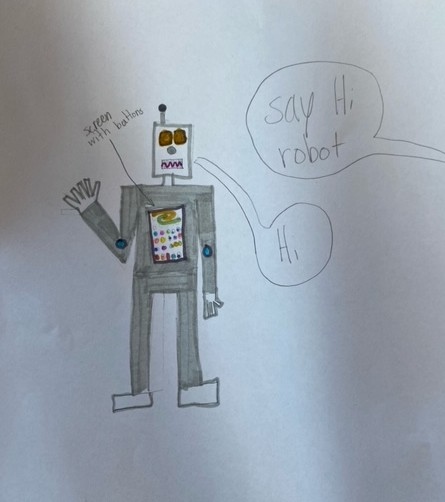
Emma is 11 years old and in the fifth grade at an elementary school in the western United States. She enjoys playing football with friends, studying writing, and doing theater. Growing up in a tech-savvy household — with smart speakers around the house and a father who works in research — she has had more hands-on exposure to AI than most kids her age, even if she doesn’t always realize it.
Already Living with AI
For Emma, AI is already part of daily life. “I have like a bunch of smart speakers in my house, so I know that kind of stuff and it’s really funny because there’s so many things we can do,” she says. She has also experienced self-driving technology firsthand and is confident it works: “I think we’ve already pretty much figured it out — you can put it on self-driving mode and it works really well.” She uses Google Maps and coding tools at school, and has encountered various AI tools. Yet when asked what AI actually stands for, she is candid: “It sounds familiar but I’ve never actually been told what it is. I hear my dad talk about it a lot.”
A Future Full of Flying Cars and Crypto
Asked to imagine 2050, Emma is optimistic and imaginative. “I think they’re going to play a much, much bigger role. In 30 years we’re going to go so far — they’re already starting to make flying cars.” She sees cryptocurrency becoming mainstream (“whatever my dad’s talking about”), and predicts that self-driving cars will be common while flying cars will be reserved for the wealthy who have pilot’s licenses. Her own hopes for 2050 are charmingly grounded: she wants to be an actress, and maybe run an ice cream truck, just like her mom did.
Where Robots Belong — and Where They Don’t
Emma has clear and considered opinions about where AI should and shouldn’t be used. She welcomes robots in restaurants (“you order on an iPad and the robot brings it to you — I bet you’ll find one in Japan”), for grading tests (“tell the robot the correct answers and it checks them — the body could be shaped like a snowman”), and for museum field-trip guides. She is strongly against AI in teaching (“they don’t have feelings”) and in childcare: “No matter how many times you test a robot it still might not work — and children might be scared of them, like how some kids are afraid of dogs.” For the elderly, she is more open: “If an older person was in a wheelchair, maybe they could use the robot like a second body, controlling it with an iPad like a remote control car.”
Trust, Shape, and Political Lines
Emma’s trust in AI is conditional but relatively high. “They don’t move and can’t hurt me. If I knew a robot had been properly tested to do a simple task, I’d probably trust it.” She does not want robots everywhere in her home. On shape, she is firm: “Definitely not one that looks like a giant human — that’d just be creepy.” If a child knew it was a robot, she says, the shape matters less. What unsettles her is deception: “If you told me something that looks and feels like a human is human, and it’s actually machinery on the inside, I’d be freaked out.” On political decision-making by AI, she is emphatic: “No way. How would they know that climate change is a bad thing? A President has to brainstorm. I’m not old enough to vote but if I could I wouldn’t vote for a robot.”
Learning and the Future of Work
Emma is not particularly motivated to learn about AI right now. “Once they actually start impacting my life I’ll want to learn more, but right now it doesn’t really affect me.” On jobs, she is pragmatic: “If the robot starts doing jobs, I’m pretty sure people will find new jobs eventually.” She is clear about what she wants to keep for herself: “Robots can do the dishes. I should do my own homework because it helps me learn. Robots can’t take the job I want as an actress.”