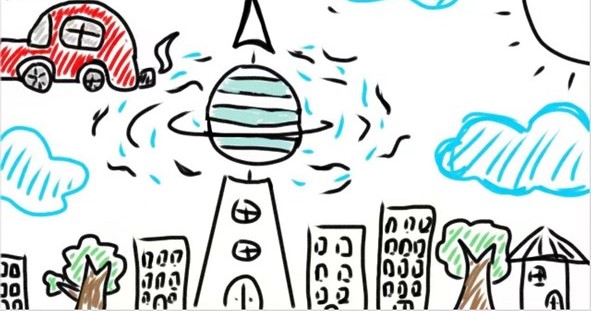
Weiwei is a 12-year-old sixth-grade student from a city in southern China, about to enter junior high school. She lives with her mother and older sister; her father works in another city. Her AI encounters so far are everyday and concrete: guide robots in shopping malls that tell you where the toilets are, and a sweeping robot at home that she finds, honestly, a little cumbersome. She thinks about technology with a child’s directness and a surprising amount of practical sense.
Growing Up With the Robots Around the Corner
Weiwei is not a technology enthusiast in the dedicated sense — she does not follow AI news or have opinions about specific systems. But she is already living with AI in small ways, and she notices things. The mall robot is useful; the sweeping robot goes around in circles and gets in the way. These observations ground her thinking: she evaluates AI less by imagining its possibilities and more by asking whether it actually helps with the thing in front of her. When she hears the words “artificial intelligence,” her first thought is robots. When she hears “robots,” she pictures something three-dimensional helping around the house. The screen-based AI — the flat, informational kind — she places in a separate mental category, one that answers questions but cannot reach into the physical world.
A Future Worth Working For
By 2050, Weiwei imagines herself at forty: hard-working, with a beautiful family and a healthy routine. She doesn’t reach for the spectacular. She does, however, expect the physical world around her to have changed considerably: restaurants with robot waiters, electronic desk-screens in classrooms that replace textbooks, high-tech products everywhere. Science and technology, in her picture, will have accelerated dramatically — not as a disruption, but as a background condition that everyone simply adapts to. For her own daily life, the most appealing use of AI is help with the chores she knows will accumulate: coming home late from work, finding the room already tidied.
At Home, in School, and in the Hospital
At home, Weiwei is relaxed about robots taking on housework, elder care, and childcare support. The advantage she values most is time — if a robot is watching the child, the parent can work or rest. She draws the limit at emotional presence: a child raised primarily by a robot, she believes, will have something missing. In medical settings, she is cautiously positive — robots can ease the burden of basic nursing, help elderly patients with small daily tasks, and monitor for emergencies at home. The rigidity of programming bothers her here: a robot that assigns three meals a day according to a fixed schedule cannot account for the moment an elderly person simply wants something different. At school, she hopes teachers will remain central, with robots as assistants that carry large amounts of knowledge and can answer obscure questions real teachers might not know.
Where AI Belongs — and Where It Doesn’t
Weiwei has a notably relaxed trust in AI compared to some of her older peers. Because robots follow code and cannot develop autonomous consciousness, she finds them fundamentally reliable — they do what they are told. This logic makes her comfortable with AI in infrastructure: water, power, delivery, garbage sorting. She would welcome garbage-sorting robots that help confused residents classify waste, and she imagines garbage-collection robots patrolling streets. For autonomous driving, she assigns responsibility clearly to the manufacturer — if the system fails, the company that made it should be held accountable. Crime prediction is where her trust ends: however much data a robot can access, it cannot read the internal psychological state that actually drives a person toward a crime.
Work, Education, and What Comes Next
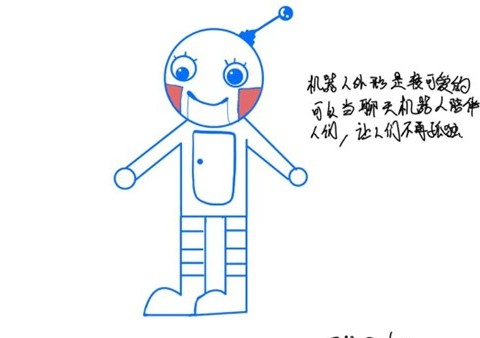
On jobs, Weiwei is matter-of-fact. Robots will take over some positions, which means some people will lose work — that is a straightforward consequence. The solution she imagines is not to resist the technology but to stay ahead of it: people who develop skills that machines cannot replicate will always have work. She is interested in learning more about how robots function, how to use them, and what to do when they break. Her preferred robot shape is humanoid — someone she could treat as a friend. Her picture of the ideal human-robot relationship in 2050 is hierarchy with collaboration: robots as assistants, subordinate in status but genuinely useful, freeing people to pursue what they actually want from life.