Growing Up Between Robotics and the Digital World
Arjun is a 16-year-old student, currently in 10th grade, who has been living in Singapore for nine years. He lives with his parents — his father, who holds degrees from prestigious overseas universities, and his mother, who works in the technology sector. Technology is a constant presence in his daily life: he uses his phone and laptop almost every moment at school, and has been actively experimenting with AI tools such as ChatGPT. His interest in technology began early. He has been involved in robotics programs for several years.
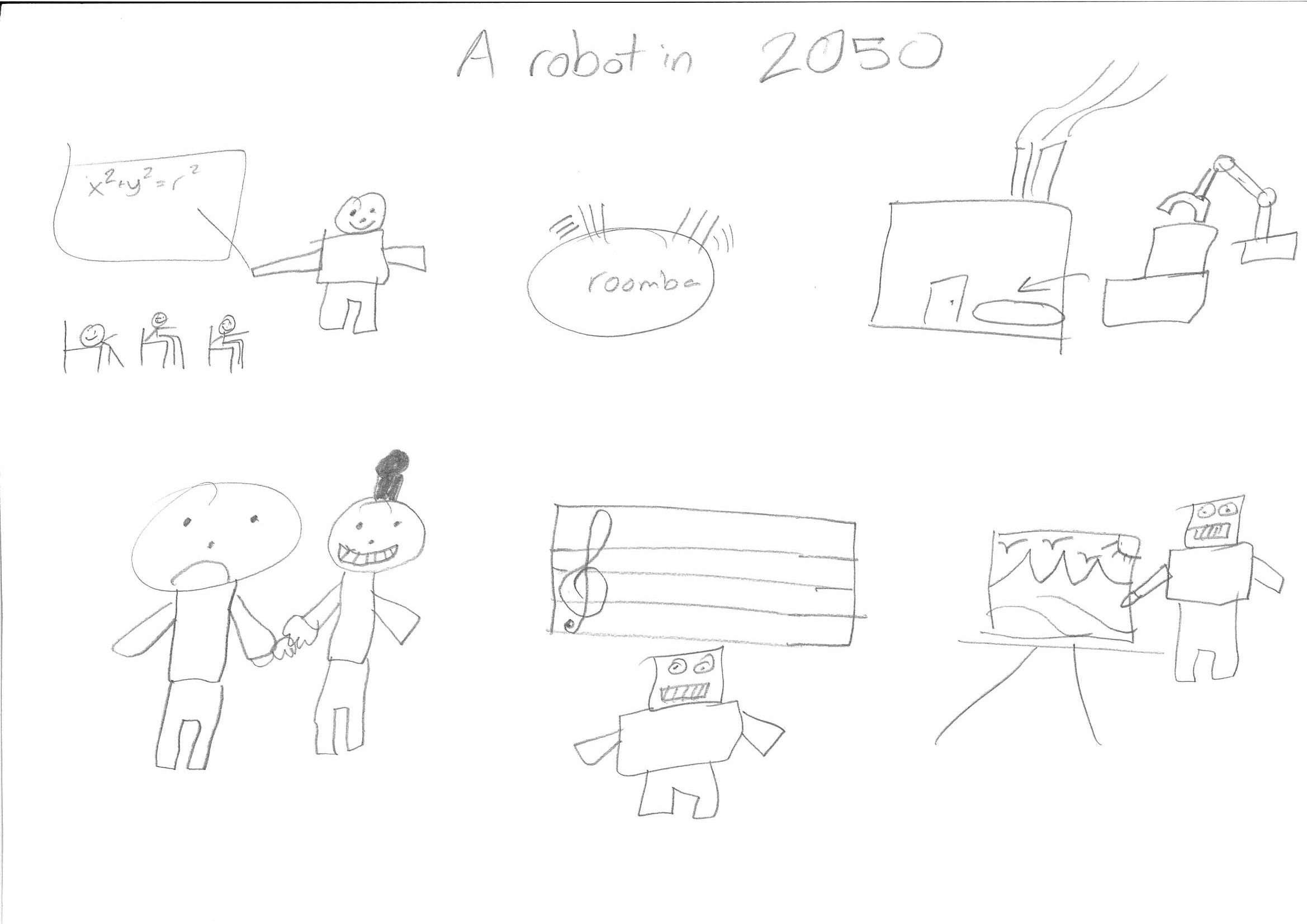
I joined a robotics program when I was younger, and since then it just snowballed. I just found it fascinating that we could automate these things to act as we wanted them to.
A Future Built by Engineers — Not Dominated by Machines
In 2050, Arjun envisions a society where robots and AI handle the tasks that humans either cannot or prefer not to do — without tipping into the dystopian scenarios so common in science fiction. He imagines himself contributing to this future through biomedical engineering, a field that brings together his twin passions for biology (especially the brain) and robotics.
Ideal society would be one where anything that humans are incapable of doing, or simply do not want to do, is done by robots and AI — but without robots taking the upper hand over humans.
He is particularly drawn to the idea of brain implants that would allow people to connect directly to the internet — a development he believes could become reality in developed countries by 2050, or at the latest by 2100. For healthcare applications, he is supportive, provided that safety and the absence of long-term side effects can be guaranteed.
Where AI Belongs — and Where It Doesn’t
Arjun’s views on AI in social roles are nuanced. He strongly supports AI in roles where efficiency and objectivity are advantages: grading essays (to remove teacher bias in subjective subjects), employment screening (to streamline the review of large numbers of candidates), and customer service (where AI could ensure consistent, objective treatment).
However, he draws a firm line when it comes to AI as a career advisor. Without human morality, he argues, an AI might simply direct everyone toward the highest-paying professions, leaving no room for creative thinkers, researchers, or scientists.
If AI is coded to advise people toward the highest paying jobs, we would have no creative thinkers, no quantum physicists, no researchers. As long as we don’t completely surrender our freedom to artificial intelligence, it could be fine.
Robots at Home, in Schools, and in Hospitals
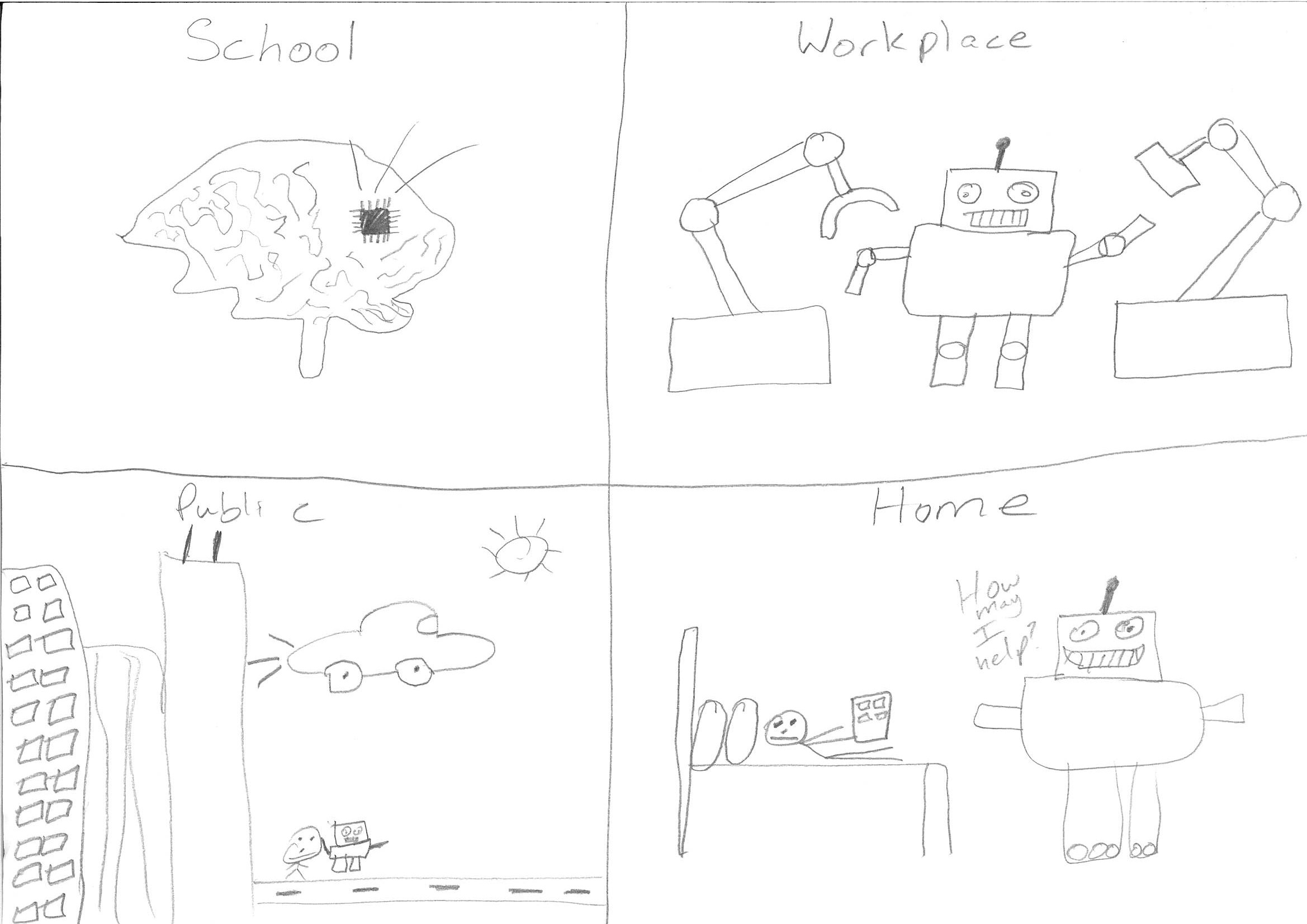
When it comes to domestic life, Arjun sees robots as a natural fit for housekeeping — Roomba-style cleaning robots already exist, he notes, and will only become more prevalent. He is comfortable with AI-assisted childcare (with proven safety), robot teachers (provided they can explain material clearly), and robot nurses (as long as human autonomy over major medical decisions is preserved).
On healthcare AI, he acknowledges the ethical complexity: an AI purely driven by data might recommend euthanasia for an elderly patient based on cost, without accounting for the immeasurable value of those final months for a family.
As long as we are still capable of making our own decisions, I would support using AI to augment healthcare — but not to blindly follow its suggestions in such matters.
Art, Authenticity, and the AI Debate
One issue that clearly engages Arjun is the question of AI-generated art. He had originally planned to bring a drawing made by an AI image program to contrast with his own, as a way of opening the debate on originality. He supports AI in translation and communication — seeing it as a way to better connect the world — but is more cautious about AI in areas that touch on human creativity and identity.
Overall, he describes his outlook as broadly optimistic: AI and robots, developed responsibly by engineers and software developers, have the potential to take on the burdens people don’t want to carry, while freeing humans to focus on what truly matters.