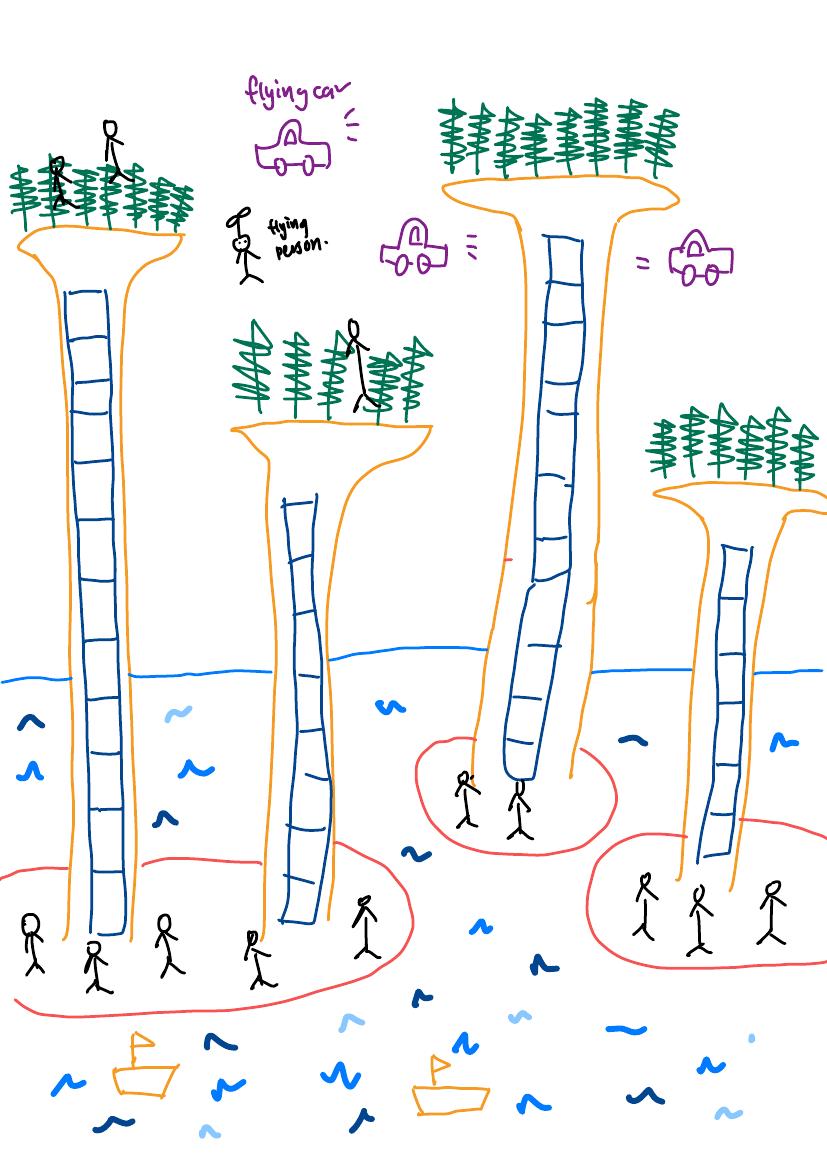
A Healthcare Student’s Human-Centred Approach to AI
Shufen is a 22-year-old waiting to begin her university studies in healthcare. She lives with her parents, older brother, and grandmother. Her mother works in a professional field; her father works in the business sector. In daily life, she uses Siri for searches and Google to control her speakers. Her approach to AI is shaped by a strong belief in human connection and a concern that over-reliance on technology erodes the qualities that make us human.
I like to talk to people. So relying on AI for communication is not ideal for me.
Stability, Peace, and a Better World
Shufen’s hopes for 2050 are heartfelt: she wants to lead a healthy life, find a partner, be financially stable, and contribute to society through charity work — particularly within the healthcare sector she is entering. For the world at large, she longs for stability and peace: less racism, fewer political conflicts, and a society less driven by anxiety. She is candid about the risks ahead.
A lot of people have things they want to strive for, and when they have things to strive for, they want to make changes. Humans do a lot of destruction — especially if you look at our Mother Nature, which is already in a bad state.
She hopes AI can help clean up gas emissions and reduce the burden on human workers — but is alarmed by its potential for misuse, having seen a show in which AI intelligence was weaponised to create autonomous soldiers.
Where Technology Helps
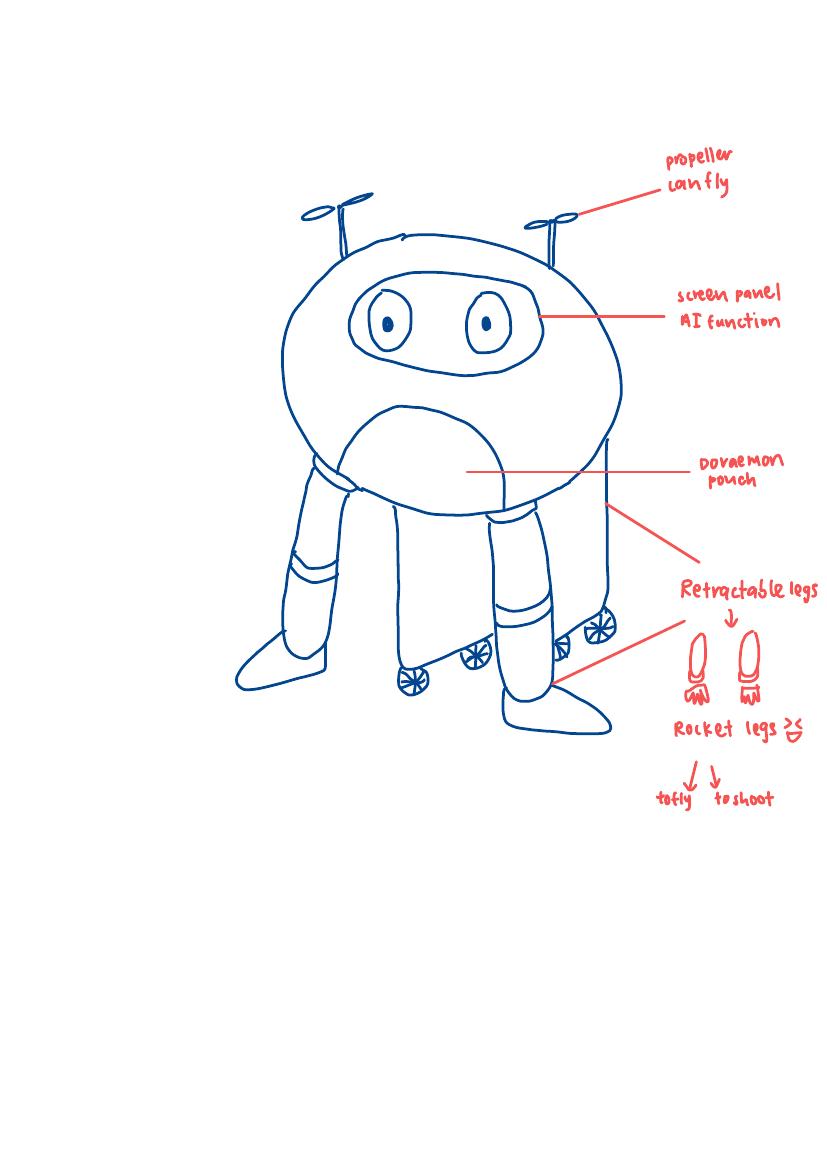
In her chosen field of healthcare, Shufen welcomes AI for laborious or precision tasks: administering medicine, transporting patients between rooms, running diagnostic scans, and conducting operations (which AI would perform more precisely than human hands). She even imagines an AI nurse that consolidates multiple monitoring functions into one unit — tracking heart rate, oxygen levels, and other vital signs — reducing the need for separate equipment and freeing up space and resources.
For the elderly, she envisions AI providing exercise programmes and entertainment, and even virtual reality experiences that allow those with limited mobility to “travel” to places they could not otherwise visit. In housekeeping, she wants AI to eliminate dust and manage laundry. In customer service, she praises AI’s consistency — unlike humans, she observes, AI service never has a bad day.
Customer service is where humans are inconsistent. AI is always coded to give good service — good tone, good satisfaction. AI will be able to achieve all these traits.
Where the Human Touch is Non-Negotiable
On the other hand, Shufen holds firm positions against AI in areas she considers fundamentally human. She does not want AI teachers — teachers give students experiences, decision-making skills, and emotional guidance that cannot be replicated. She opposes AI for childcare (children will lack the human touch and peer communication skills they need), for career advice (personal experience from a real person is irreplaceable), and for intelligence augmentation (which she sees as unnatural and a threat to the individuality that makes humans different from AI).
On political decision-making, workers management, and employee assessment, she is similarly resistant. She supports AI for resume screening and logistical recruitment tasks, but final hiring should remain human. And while she is comfortable with AI colleagues in a functional sense, she acknowledges they wouldn’t understand her jokes.
Trust, Creativity, and What Makes Us Human
Shufen’s trust in AI is measured and conditional. She finds chatbots helpful and efficient for banking queries. She is positive about robot waiters (she knows they are already deployed and performing well), AI salespersons (who can describe products and detect defects), and drone delivery. She welcomes AI in surveillance for crime prevention, border management, and environmental protection.
What she resists is the blurring of what is human. Intelligence augmentation, she argues, would make people “no different from AI.” The human brain — its capacity for lateral thinking, its emotional life, its imperfection — is precisely what separates us. As she heads into a healthcare career at the intersection of people and technology, she carries a fundamentally human-centred vision of what AI should, and should not, do.