Elena, 22, recently completed her Chemistry degree and is currently doing an internship. She lives with her mother, younger brother, and grandmother — a multi-generational household that informs her thinking about care, community, and the limits of what machines should be asked to do.
Growing Up Between Chemistry and Skepticism
At home, technology is unevenly distributed. Elena’s brother studies computer science and happily uses Alexa; she occasionally uses Siri but finds it “a bit strange.” There is a Roomba, though she is unsure how programmable it is. Her overall trust in AI is low — she rates it quite little — and she admits that her skepticism probably comes partly from limited exposure. “I think I have such a negative view because I haven’t interacted with it much,” she says. The films Her and I, Robot come to mind when she thinks about AI. A news story about robot dogs carrying guns crystallized her concerns about military applications: “you could see it coming.”
A Society That Isn’t Dominated by Money
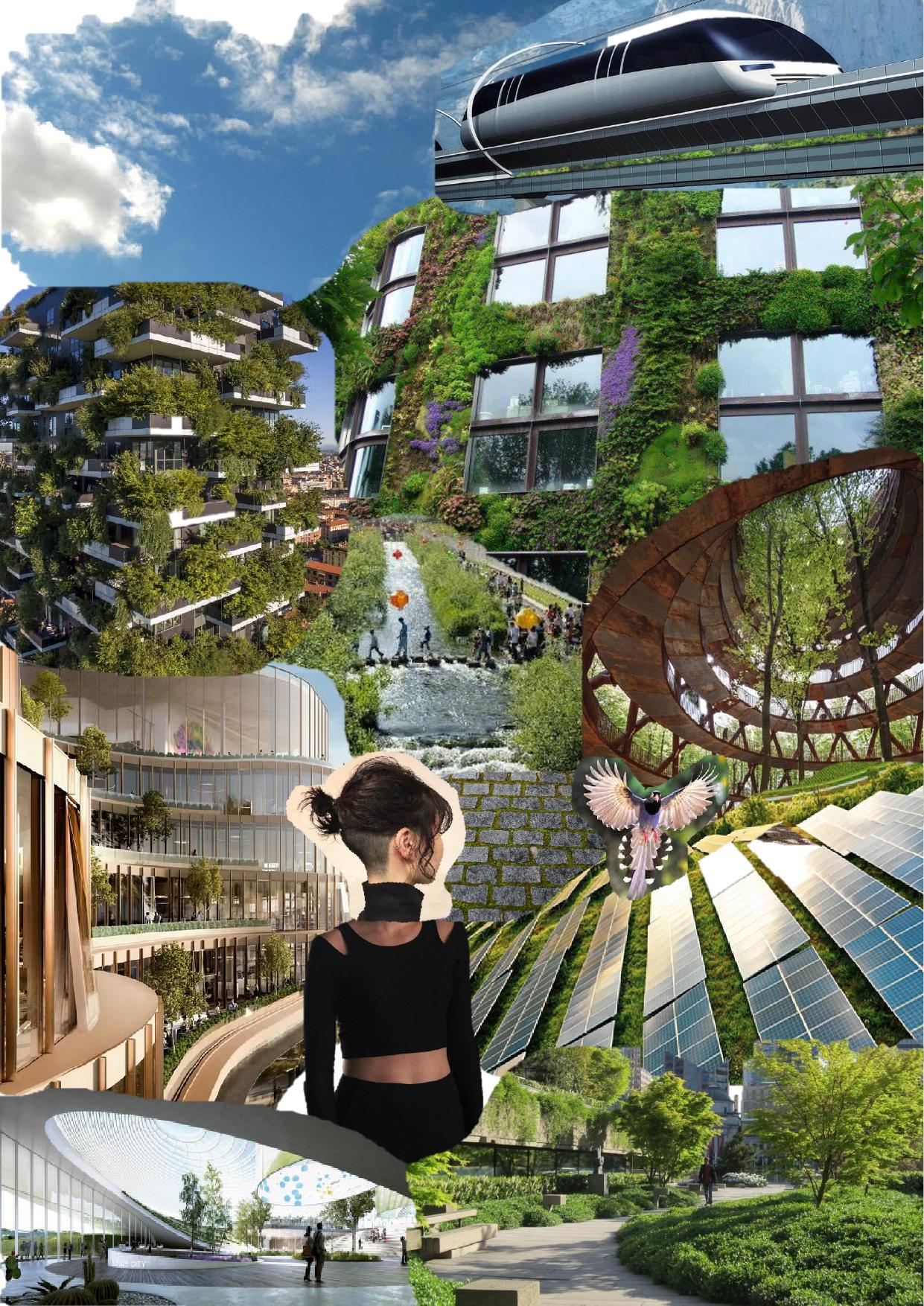
Elena’s 2050 is not a techno-utopia. What she wants is a society that has stepped back from extreme capitalism — “more communal, not so liberal and so dominated by money.” On a personal level, she hopes to have settled down, achieved some independence, and, most urgently, to still be living on a habitable planet. Climate anxiety runs through her interview. On architecture and cities she is clear: green spaces, simpler structures, natural materials, lots of light, community areas within cities rather than ever-taller skyscrapers. “I can’t imagine living in Blade Runner-type cities,” she says.
Robot Design — Useful, Non-Humanoid, Non-Intrusive
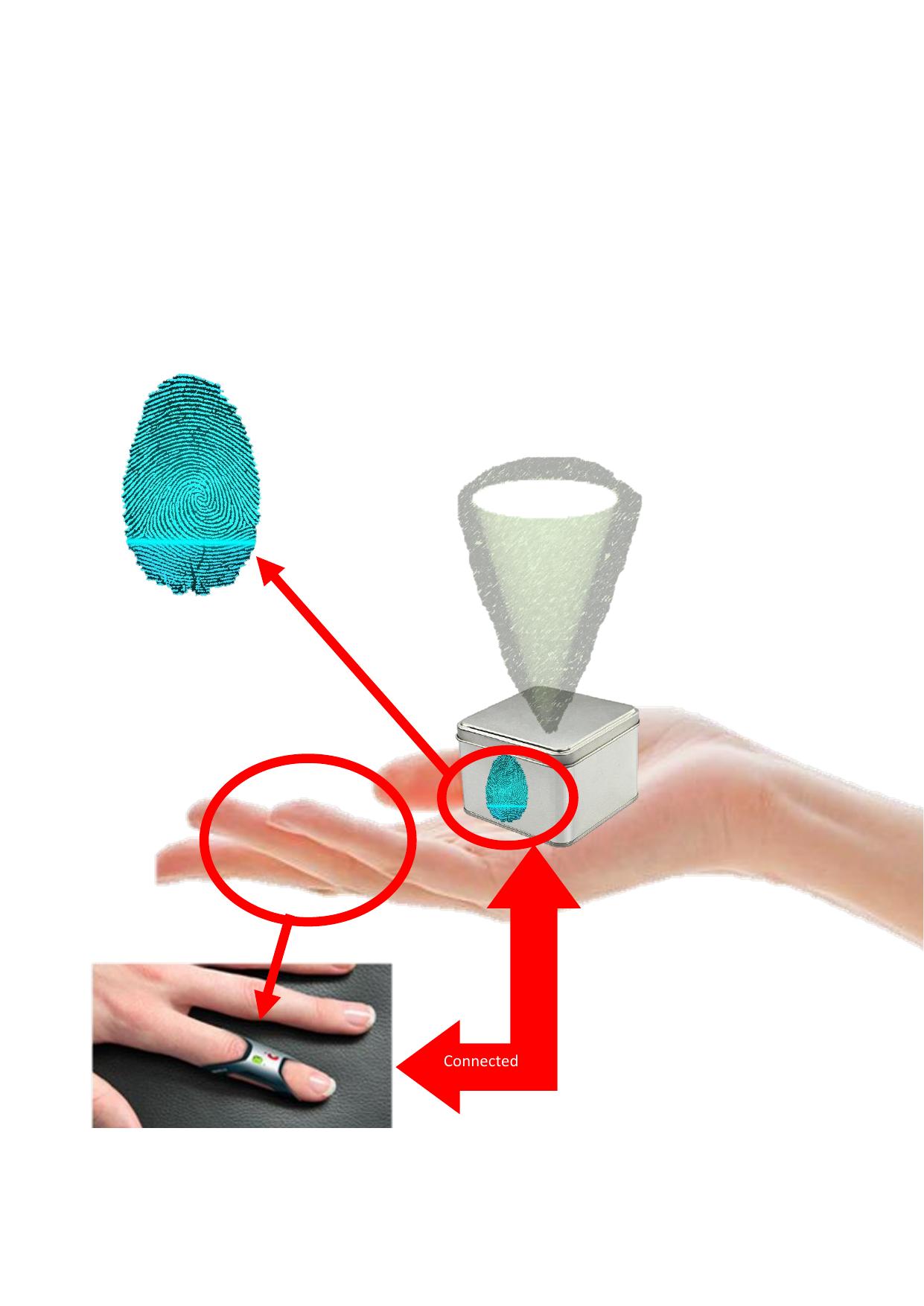
The device Elena designed is small, wearable, and personal: a gadget held in the palm, connected to a ring on her finger and linked to glasses and an earpiece. It would function like a smartphone but more intensively — Google Maps projected as a luminous thread onto her glasses, holographic 3D calls, a tracking function for objects she tends to lose, and music. It is non-humanoid, purposeful, and sized to fit in a pocket. “What gives me mixed feelings in general is the mimicry of the human,” she explains. She would rather AI be clearly a tool than a thing trying to be a person.
Where AI Belongs — and Where It Doesn’t
Elena’s clearest line is between technical tasks and human ones. She welcomes AI in hospitals (as a complement to nurses and doctors, never a substitute), for package delivery, environmental protection in hard-to-reach places, and translation. She opposes AI in caregiving roles for children or the elderly, in hiring, in stores (she prefers being greeted by a person), and entirely in surveillance, military, and border management. The question she finds most pressing is legal and ethical: “Is it legal for a robot to be on a border with a weapon? To what extent do we want to introduce robots into our society?” She sees these as questions society hasn’t answered yet.
Work, Equality, and the Risk of Collapse
Elena’s concerns about AI and work are structural. She acknowledges that mechanical, precarious jobs could reasonably be automated, but worries about the consequences: if people lose jobs and no one provides a basic income, the result is social collapse and greater inequality. “I’d rather people keep their jobs than replace them with AI because these are people who have to eat and support a family.” In an ideal world with universal basic income, she would feel differently. For education in 2050 she envisions something closer to the Finnish model — project-based, collaborative, teaching students to think rather than to memorize. Her ideal relationship with AI by 2050 is like the relationship with a mobile phone: useful, replaceable, not essential to life.