Lucía, 23, grew up in a large city and recently completed her degree in Advertising and Public Relations. Throughout her four years at university she worked at a gamification consultancy that uses games as a methodology for training and education — an experience she says taught her things no classroom could.
Growing Up Between Grades and Games
Lucía describes her path to her current degree as anything but linear. She entered university through an open program, combining political and global studies before realizing she wanted something closer to communication. “I got very good grades,” she says, “which is what happens when you don’t know where to go.” Once she found Advertising and Public Relations, things clicked. Alongside her studies she kept her job at the gamification company, building practical knowledge that layered on top of her formal education. At home, her household spans a wide range of educational backgrounds — her parents come from different educational backgrounds — something that has sharpened her awareness of inequality from an early age.
A Future of Small Communities and Green Cities
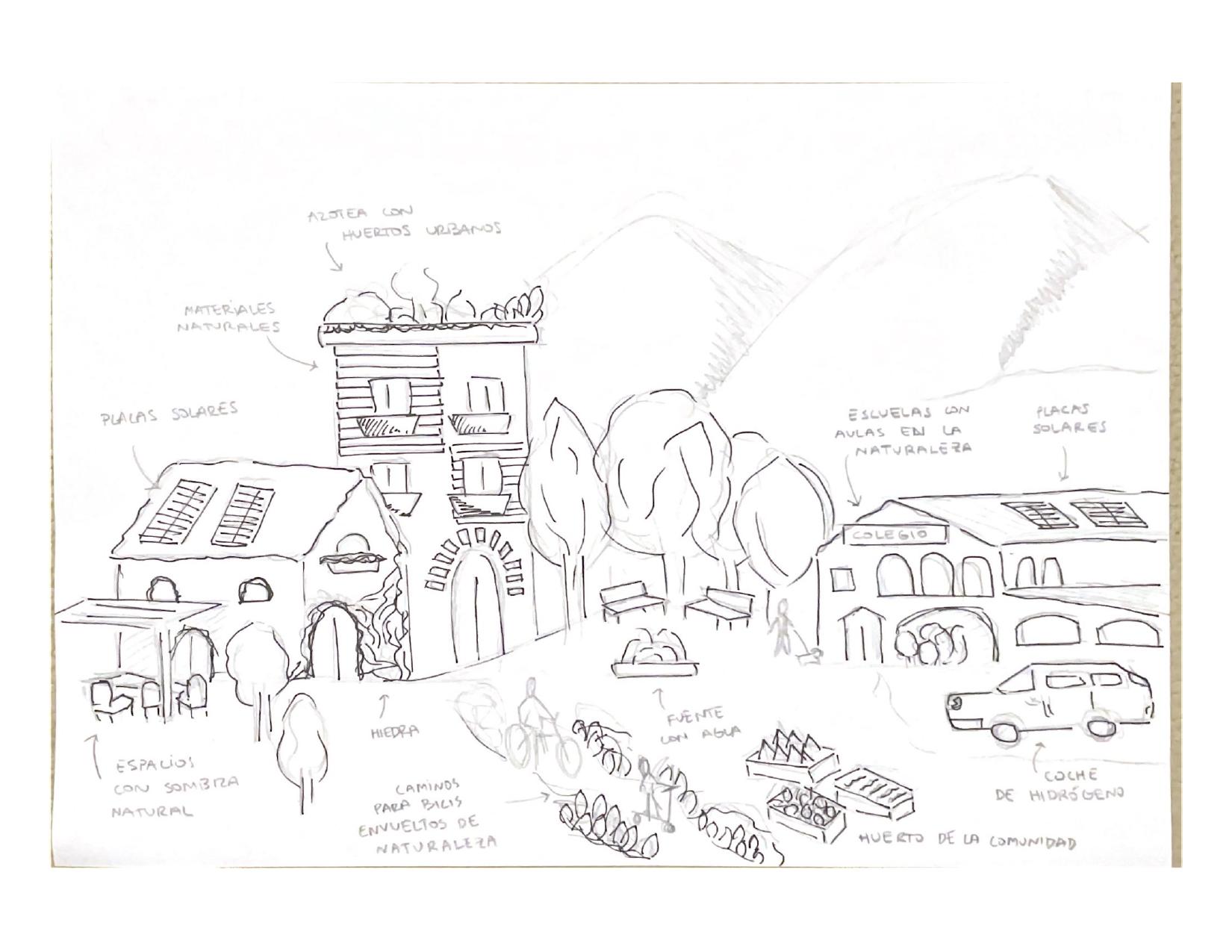
When asked about 2050, Lucía doesn’t picture towering offices or crowded motorways. She imagines cities restructured as self-sufficient communities, more like villages in scale — low-rise buildings with birdhouses on their facades, gardens growing at ground level, benches made of stone or natural materials. “I imagine a very green city integrated with nature,” she says. She envisions hydrogen cars replacing electric ones, schools open to the outdoors, and remote work eliminating the need for large office blocks entirely. Her vision is quietly radical: a city that has essentially rewilded itself while remaining functional.
AI as Complement, Not Replacement
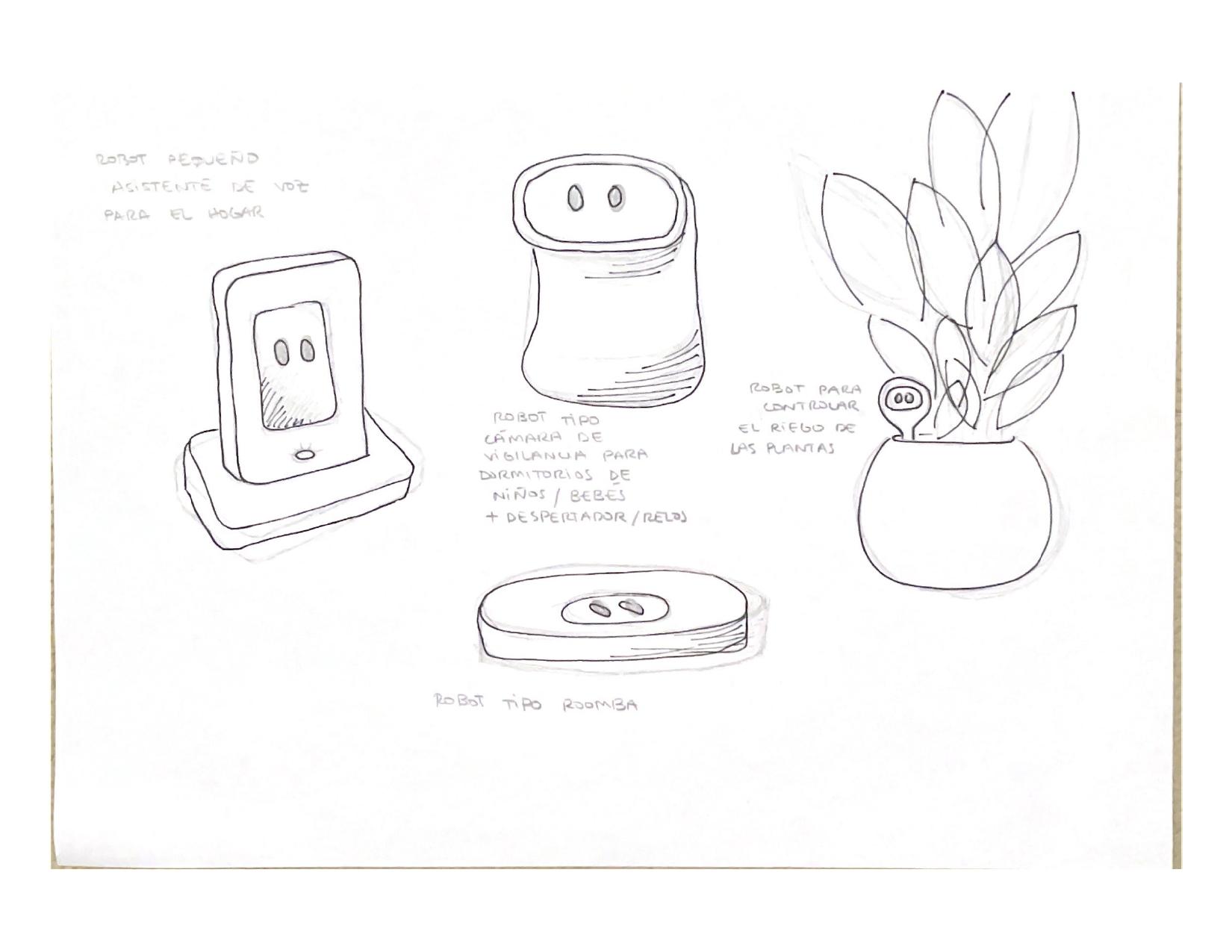
Lucía’s clearest conviction is that robots and AI should be complements, never protagonists. She welcomes smart traffic lights that can react to a ball rolling into the road, home assistants that receive spoken commands, and small sensor devices that monitor plants for pests or wind. What she draws are robots with rounded forms — no sharp corners, no attempt to mimic the human body. “I don’t think a robot should imitate the human figure,” she says. A neutral, minimalist design that fits unobtrusively into a home or hospital is what she has in mind. For personal voice interaction she prefers a natural-sounding voice over a mechanical one, but she is firm that the machine should stay in the background.
Where AI Belongs — and Where It Doesn’t
On the question of specific applications, Lucía is methodical. She welcomes AI in healthcare implants, career counseling (provided the algorithm is free of gender bias), customer service, driverless distribution, and environmental protection. She is more cautious about caregiving: robots should not replace nurses or look after children, because young people learn by imitating other humans, and socialization is part of development. AI judges and political decision-making systems worry her — “what is legal does not always mean what is correct” — and military applications she rejects outright, arguing that technology would only amplify existing violence. On recruitment, she acknowledges AI can evaluate knowledge but insists it cannot assess soft skills or human will.
Skills Over Certificates: Education and Work in 2050
Lucía believes the education system of 2050 should prioritize what differentiates people from machines: creative problem-solving, communication, active listening, empathy. “All knowledge can be found on the internet,” she points out; what schools need to teach is how to use it. On work, she would like shorter hours and a society that does not revolve around employment. She is comfortable delegating repetitive, mechanical tasks to robots — factory assembly, city cleaning — while keeping creative, management, and relational work in human hands. Her trust in AI sits at around 7–8 out of 10, conditional on it being designed ethically and without bias. She credits WALL·E as a positive cultural reference and Lucy as a cautionary one.